All semester, we’ve been talking about cinematic storytelling. Characters, arcs, details, scenes, fully-envisioned worlds. Now we’re going to do a deep dive into what that means. In this case, we’re fortunate to have an opportunity to pick the brain of screenwriter Grant Thompson, who will be joining us Tuesday for a special class.
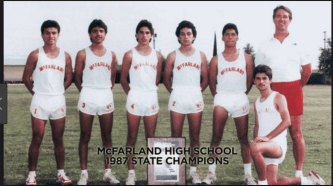
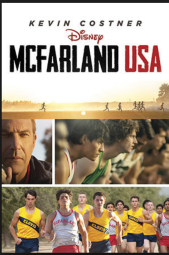
Thompson studied history at Harvard. Inspired by Goodwill Hunting, he became an actor – Bring it On, Six Feet Under, and others – and then, later, a screenwriter. He wrote McFarland USA, which came out to glowing reviews in 2015. You can read an interview about his process here. He’s since worked on many projects, and spent more than a year at Pixar, all of which he’ll tell you about.
I met Grant five years ago, when he was hired to adapt a baseball story I wrote for Sports Illustrated. During the process, what struck me was how deeply he cared about the nonfiction details. In writing the script, he essentially re-reported my story.
Next week, Grant will be talking to you about what makes stories cinematic, the tenets of storytelling, and the power of nonfiction in movies. We’ll do a deep dive into “Mourning Glory” and then discuss how to reverse engineer the process. The goal is not to teach you how to write screenplays (or fiction), though you’ll learn some of that, but rather to understand the process and then borrow techniques to make your nonfiction stories as compelling as possible.
Before the next class, please:
- Read Mourning Glory, the magazine story. Take notes as you go and think about how it was reported and written. Then, read the script, which is password protected, and look for differences and overlap. If you weren’t in class, email me and I’ll send you the password.
- Watch McFarland USA. It costs $2.99 to stream on various services. If you’re interested, you can also read the stories upon which it is based: Running for their Lives, by Gary Smith, and this piece by Mark Arax in the LA Times.
- By Monday at 5 PM, email me your story summaries/pitches to present to Grant, as discussed in class. That means the six crystallizing exercises. The last one should be no longer than 75 words.
- Keep working on your stories. Ping me if you have questions. Reading the outlines and partial drafts, I saw potential. Keep at it.
 Storytelling Through Sports