Good to see you take advantage of the Warriors opportunity. In particular, Marcus Thompson’s advice appeared to resonate. Focusing on the How and Why, getting to the 2 AM version of the person, and tactics to create trust. He also had an important point about just showing up. Let the subject become familiar with you and see you in situations where you’re not asking anything of them. And kudos to Ryan for already turning one of her three story ideas into an actual, assigned story for the Athletic. Love the hustle.
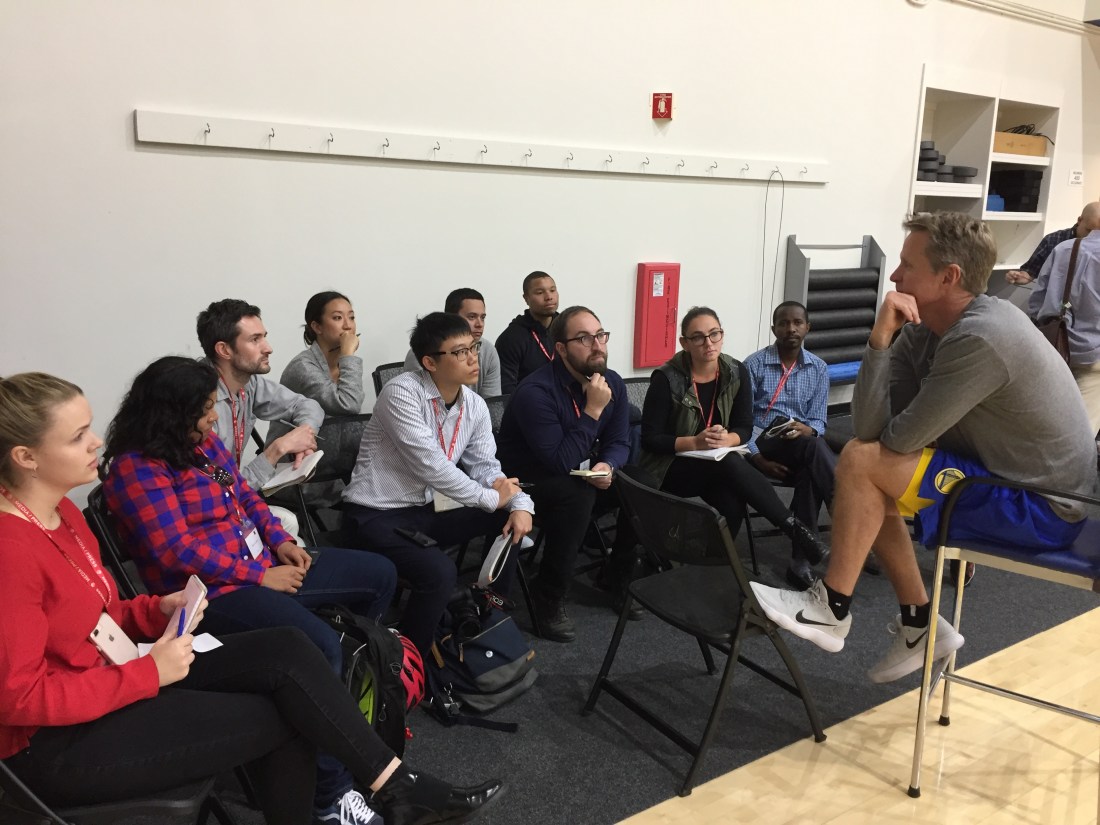
I saw some of you tweeted thanks to the writers and team. I strongly encourage all of you to also write a thank you note to Raymond Ridder at the Warriors. The mailing address is: Raymond Ridder, Golden State Warriors, 1011 Broadway, Oakland, CA 94607
For Next Week:
- Email me your potential lede, scene, or writing chunk of 500 words or so by 5 PM on Monday. Print out a copy and bring it to class as well, for discussion. More details at the bottom of this post
- Update me on your story progress. I spoke to Simon, Carlos, Cecilia, and a few others. If you haven’t checked in, send an email and let’s talk shop. This is a crucial time in the process. Let’s make sure you’re on track. Take advantage of office hours next Tuesday as well.
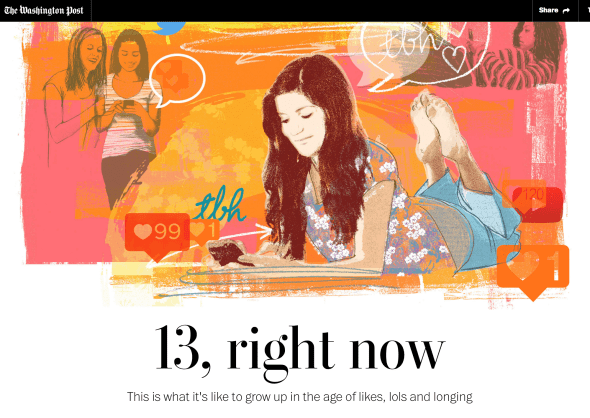
- Closely read two stories, as we’ll be going over them in class. Neither is about sports; both are remarkable examples of taking everyday life and drawing out resonance, from two different eras. We keep talking about not needing access to big names. Instead, report the hell out of something, frame it, and write it with care. That’s what the following two writers did. The first is one of my favorite magazine stories ever: “The American Man at Age Ten,” by Susan Orlean, which ran in Esquire. The second is, in some ways, a sequel, though it deals with different themes: “13, Right Now” by Jessica Contrera of The Washington Post
Details on the Writing Assignment:
First off, do you have a story you’re confident about? If not, see #2 above. It’s time to find one and start moving on it. If not, you’ll miss out on the value of this class in the second semester.
Okay, you’ve got a story. You’ve started reporting and are gathering string. Good. Now force yourself to start thinking about what it will look like on the page/screen. Tone, characters, arc. All that good stuff. It’s time to write something. My suggestion: Take the best stuff you have so far, whether it’s narrative or a re-created scene or even context/exposition, and write the heck out of it. Maybe it’s your lede. Maybe it will become your lede. Maybe it will be a section opener. Regardless, it will be valuable and force you to think about how you’re going to tell the story, which in turn will help direct your reporting. If you write more than 500 words, that’s fine. Try to keep it under 750. And, as always, try to tell a story. Conflict/tension/etc. Stories are when things go wrong. When the existing order is upheaved.
If your project is visual: Instead, prepare two things. First, a short summary of where you’re at and the anticipated structure of your visual narrative. Two, a selection of your best stuff so far that we can share if needed.
Any questions? Hit me up. Looking for examples? Look at the first few grafs of almost any story on the class Readings. Look at the start of the Grann story. Look at the beginning of Jessica and Susan’s stories this week (or, really, any of Susan’s paragraphs; they’re all lovely).
 Storytelling Through Sports