Excellent questions for Ann. She was impressed.
Three thoughts from her visit that resonated, at least for me: 1) it’s important to remember that you’ll outlast the athletes and coaches you’re covering 2) always be honest as an opinion writer because otherwise people see through it and 3) when interviewing, keep people going in “whatever direction their passion is”.
For Next Week
- Keep working on your stories. Those of you who had to reboot/find new ideas, send me an updated pitch by Monday. Let’s make sure you catch up.
- By Monday at 5 PM, file two items from your peer interview: 1) either a transcript or a piece of re-created writing and 2) 200 words or so of feedback to your partner (and me). Details on both at the bottom of this post.
- Here’s that Cal Sunday story pitch piece from Nieman
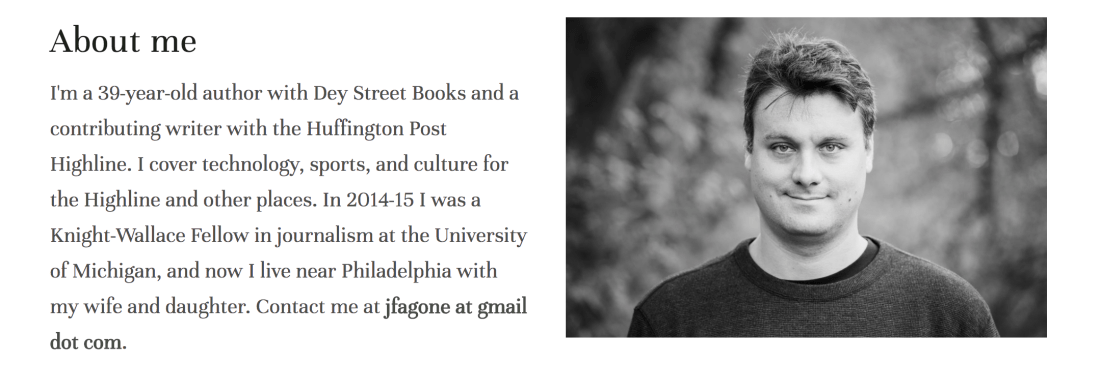
- We’re fortunate to have another excellent in-class guest, Jason Fagone. Please familiarize yourself with all his work, but in particular, make sure to read these two stories: “The Dirtiest Player”, from GQ, and “What Bullets Do to Bodies” from Huffington Post Highline He’ll be discussing them in detail. Each story was impactful and deeply-reported. They showcase various types of storytelling, including observed scenes, re-created scenes, and judicious use of the first person.
- You should also check out Jason’s latest book, The Woman Who Smashed Codes, and this creative (and viral) twitter summary of it, as well as this New York Times Q&A. His podcast on freelancing, Kill Fee, is here. He’s currently working as a narrative writer for the Chronicle. Other magazine stories he’s written are here.
Interview Assignment:
By Monday at 5 PM, please email me:
1. Either a word-for-word transcript of your 20-minute interview. OR: A short piece of writing, more than 300 words but less than 500, using re-created reporting. For the transcript: Include your questions and your partner’s complete answers. It isn’t necessary to include verbal tics such as “um”. For the writing: Tell the story of how your partner’s parents met – or their worst moment or the closest they came to dying – as if it’s an element of a narrative story (or a self-contained short narrative, like Brady Dennis). Use everything we’ve been discussing: story arc, suspense, motivation, characters, etc. Let me know if this isn’t clear.
2. Write a memo of 200 to 400 words about the experience and email it to both me and your class partner. Include these elements: A) your feedback on your partner’s interviewing technique. What did he/she do well? What did he/she miss? Did you feel comfortable? How would you describe his/her interviewing style and listening? Also, include B) Your thoughts on what it was like to be interviewed. How did it feel? Did it make you realize anything about your own interviewing approach? This should not take more than 10 minutes. Don’t worry about making it “written”. Rather, focus on insightful and helpful for your partner.
 Storytelling Through Sports